Film & Live Performance
Sightlines and Temporary Spaces
How sightlines, barriers, exits and weather zones change live spectacle design before anyone discusses spectacle itself.
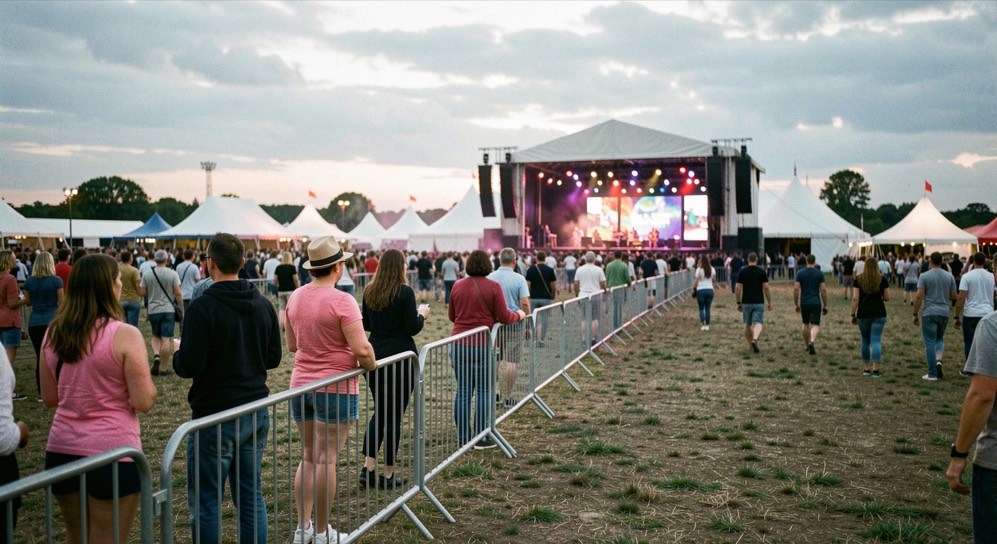
A live action moment is shaped by geometry. Where can people see? Where must they not gather? How quickly can a space reset if conditions change?
Design Begins With Movement
Entrances, exits, accessible routes and emergency paths compete with sightlines. A clear view means little if crowds cannot move safely when weather or programming shifts.
Temporary Does Not Mean Informal
Temporary structures still require engineering assumptions, ground conditions, wind exposure and inspection. Local permits and venue rules vary; general magazine writing cannot approve any installation.
Communication Is Spectacle Infrastructure
Signage, lighting, public address and trained staff determine whether audiences understand delays and boundaries. Those systems are as much part of live performance as the central event.
The Audience Is Part of the Site Plan
Live spectacle changes as soon as spectators enter the environment. Their arrival routes, waiting areas, accessible paths, toilets, concessions, exits and transport all influence where density forms. A beautiful sightline can create a poor crowd route if people must cross circulation to reach it. Design therefore starts with movement and capacity before it reaches stage pictures.
Different audience members also experience the same geometry differently. A standing crowd, seated terrace, wheelchair position and family area do not share one eye level or one evacuation pace. Inclusive planning treats accessible viewing as part of the main design rather than a leftover zone. It also considers captions, hearing support, lighting changes and clear information during a delay.
Temporary Structures Have Permanent Consequences
Stages, barriers, towers, tents and platforms may exist for only a few days, but they still interact with ground conditions, wind, electrical systems and public movement. Competent designers, installers, inspectors, venue staff and local authorities each hold parts of that responsibility. Magazine photographs cannot show whether documentation, ballast, inspection or permits match the installation.
This is why editorial coverage should distinguish visual description from approval. It can explain that a barrier layout directs flow or that a tower changes sightlines. It cannot declare a structure safe. Current venue rules, engineering information and local requirements remain the controlling sources.
Communication Extends the Architecture
Signs, screens, staff, lighting and public-address messages create a second layer of wayfinding. They become especially important when an event pauses. People need to know whether to stay, move, shelter or leave, and the message must reach those who cannot see the stage. A delay plan that exists only in a control room is not yet an audience plan.
- Can people enter, circulate and leave without crossing a performance boundary?
- Are accessible routes and viewing positions integrated into the main plan?
- Who monitors temporary structures and environmental conditions?
- How will instructions reach the whole audience during a hold?
- What evidence supports the stated capacity and layout?
HSE entertainment guidance separates crowd management, temporary structures and hazardous production activities into distinct areas of attention. That supports a broad editorial view: the spectacle is only one element in a functioning venue. Ticketing, transport, hospitality, weather services and production suppliers all fit this category when coverage remains anchored to audience experience and verifiable responsibilities.
Source trail
HSE's entertainment and leisure index points readers to distinct guidance on crowds, temporary studios, electrical safety and potentially hazardous production activities. National Weather Service guidance for organized outdoor activities emphasizes a written plan, assigned monitoring, shelter and clear restart criteria.
Those authorities support the article's systems view of a venue. Capacity, temporary structures, accessibility and emergency planning still depend on local law, designers, engineers, venue management and emergency services. A layout illustration or event review cannot approve a real site.
Editorial conclusion
A successful temporary venue feels intuitive because complex planning remains mostly invisible. Sightlines, circulation, accessibility, structures, weather and communication support one another. Editorial coverage should make those systems visible without declaring an installation safe from photographs. This broad frame also gives event, travel, hospitality and technology partners a relevant place without turning the category into unrelated lifestyle content. Readers should expect claims about capacity, evacuation and structures to identify the responsible local evidence.