Culture & Archive
How Stunt History Becomes Popular Memory
Fan scholarship, archival clips, credits campaigns and museum exhibitions shape which action innovations survive public memory.
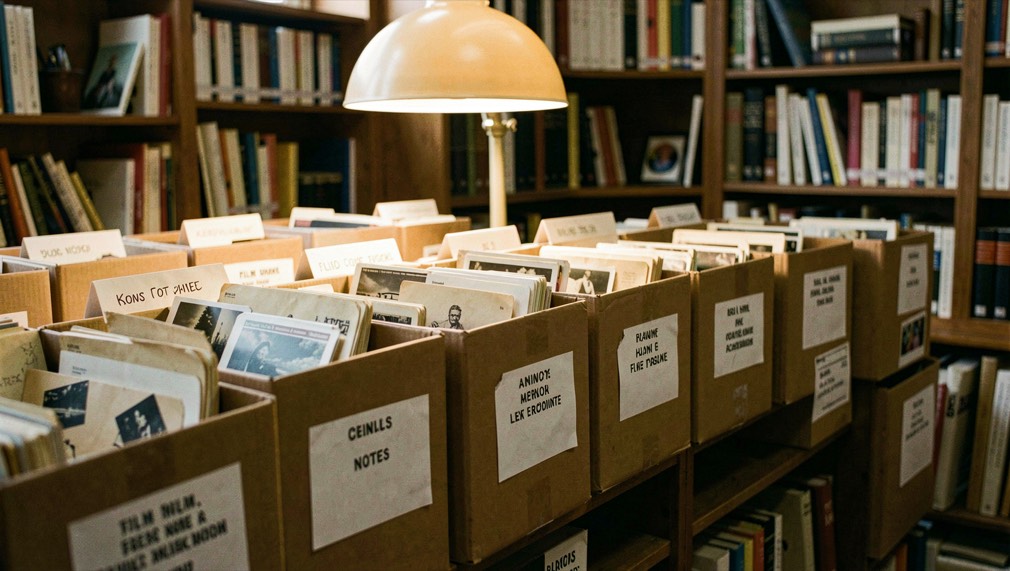
Stunt history is not simply a list of firsts. It is a contest between surviving evidence, union advocacy, marketing narratives and the technical ease of copying old clips.
Archives Select
Every collection reflects acquisitions and gaps. Personal papers may preserve rehearsal notes while studio publicity preserves only finished spectacle. Researchers therefore treat absence as evidence too.
Credits Change Recognition
Campaigns for stunt-design awards and clearer credits influence who is remembered. When credit categories expand, older work is often reread through newer labels.
Fan Scholarship Adds Value
Frame comparisons, location visits and oral histories can recover overlooked contributors. They work best when they distinguish observation from inference.
Credits Are Necessary but Incomplete
Popular memory often begins with screen credits, yet credits reflect contractual practice, space, hierarchy and the conventions of a period. A sequence may involve performers, doubles, coordinators, riggers, drivers, special-effects teams, editors and visual-effects artists whose contributions are grouped or omitted. Historical research therefore treats the credit roll as one source, not a complete authorship map.
Trade publications, union records, production notes, oral histories and museum collections can add context. Each has its own bias. Publicity emphasizes marketable stories, personal recollection changes over time, and archives preserve what someone chose to save. Responsible history makes those limits visible rather than blending every source into one confident anecdote.
Clips Lose Context as They Travel
A short clip can preserve remarkable performance while detaching it from production date, title, contributor and technical circumstances. Reposts may crop credits, change speed or add incorrect captions. Researchers can improve the record by tracing the earliest available publication, recording stable identifiers and separating what the image shows from what later commentary claims.
Fan scholarship is valuable here. Enthusiasts often identify performers, vehicles, locations or alternate versions that institutions have not catalogued. The best projects keep a transparent distinction between confirmed attribution, plausible inference and open question. Corrections then strengthen the archive instead of threatening its authority.
Recognition Changes the Questions We Ask
Campaigns for awards, retrospectives and named credits do more than celebrate individuals. They encourage viewers to notice planning, doubling, coordination and collaboration. That attention can also reveal whose work was historically less visible because of gender, race, disability, nationality or employment status. A broader archive does not need to invent heroes; it needs to look beyond the most repeated publicity story.
- Record title, release, version and the exact source of each attribution.
- Preserve uncertainty when available sources disagree.
- Credit archive holders and respect reproduction rights.
- Connect clips to production context without reverse-engineering dangerous methods.
- Invite corrections with evidence and retain a dated change record.
This approach turns stunt history into an evidence practice. Books, exhibitions, documentaries, collectibles and streaming archives can all support that work when they identify sources and contributors. The Review's role is to connect those records, not to claim firsthand memory of productions it did not witness.
Source trail
Public credits, union material, institutional collections and creator-controlled archives each answer different historical questions. The Review uses SAG-AFTRA's public stunt resources for role context and treats archive captures as evidence of publication, not proof that every caption is correct. A clip without an attributable production source remains an object for visual analysis, not a confirmed credit record.
Corrections should identify the title, version, contributor and supporting record. We preserve disagreement when sources conflict and avoid reproducing media without rights. This method gives fan research a place while keeping the distinction between discovery, inference and verified attribution visible.
Editorial conclusion
Good history preserves both contribution and uncertainty. It records where an attribution came from, distinguishes a visual observation from a production fact and keeps corrections possible. That method can recover overlooked work without manufacturing certainty. It also makes archives, books, museums and documentaries more useful because readers can follow the evidence rather than inherit another unsourced legend. Dates, versions, original captions and named repositories are small details that make later correction possible and allow contributors to receive accurate recognition.