Atlas Record
Fire-Adjacent Spectacle
Qualities emphasized: thermal awareness, calm procedure, spatial discipline.
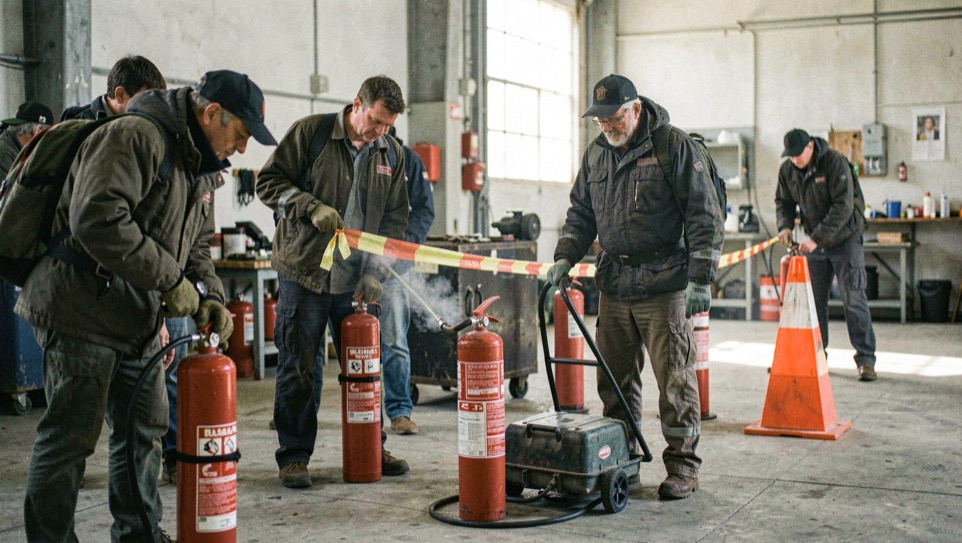
- Context
- screen effects, live performances, ceremonial imagery
- Generic gear family
- thermal barriers, protective layers, extinguishing support
- Roles
- licensed operator, safety officer, authority having jurisdiction
- Supervision limit
- Licenses, permits and fire-authority approval
What this record means
Fire-adjacent spectacle is governed by licensed operators, production coordination, venue controls and the authority having jurisdiction. Heat, smoke, costume, fuel, weather, audience distance and extinguishing provision can interact. A compelling image does not reveal the permits or layered protections behind it. This record explains the decision chain and the need for explicit approvals. It contains no fuel information, timing, distances or preparation steps. Readers should use it to identify responsible roles and official sources, never to plan an effect.
Questions that belong in a professional briefing
- Who owns the specialist plan and has authority to stop the work?
- Which environment, equipment and personnel assumptions were approved?
- What change would require a new briefing or specialist review?
- How are communication, medical support and emergency response integrated?
How the fields connect
In Fire-Adjacent Spectacle, the qualities listed as thermal awareness, calm procedure, spatial discipline describe what a reader may observe, not a readiness test. The context field, screen effects, live performances, ceremonial imagery, explains where the work can appear, while the equipment field names only broad families: thermal barriers, protective layers, extinguishing support. None of those labels establishes compatibility or approval. The responsible team must interpret them for the actual person, environment and production.
A source-backed profile should identify the credited or appointed roles, here summarized as licensed operator, safety officer, authority having jurisdiction, and state the controlling boundary: Licenses, permits and fire-authority approval. It should also record which authority, venue rule or current production document applies. If those facts are unavailable, the honest result is an open question rather than an inferred technique.
Comparisons also need context. A quality shared by two disciplines does not make their preparation, risk controls or professional responsibilities interchangeable. The atlas therefore supports better questions and clearer commissioning conversations; it never substitutes one field's assumptions for another's specialist judgment.
The record helps readers compare fields and identify specialists. It contains no technique, measurement or construction detail. Use the atlas method and source page for interpretation limits.