Atlas Record
Falls and Body Control
Qualities emphasized: balance, deceleration, landing awareness.
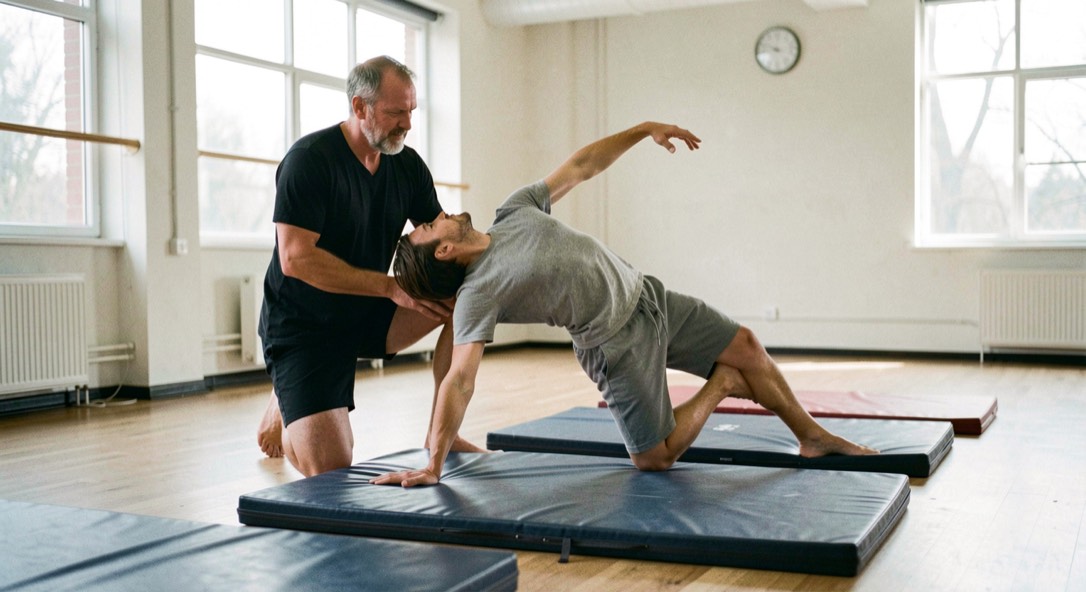
- Context
- low theatrical falls, motion capture, training demonstrations
- Generic gear family
- mats, knee and elbow protection
- Roles
- movement coach, spotter, floor supervisor
- Supervision limit
- Surface inspection and coach-controlled progression
What this record means
Falls and body control cover a broad family of movement questions rather than one technique. Surface, height, costume, repetition, fatigue and camera or audience position change the context. General balance and deceleration qualities may support performance, but progressions and readiness belong to qualified coaching and production supervision. The atlas record helps readers distinguish low theatrical movement, motion-capture work and specialist fall activity. It deliberately omits landing instructions, measurements and drills because those details become unsafe when detached from individual assessment and a controlled environment.
Questions that belong in a professional briefing
- Who owns the specialist plan and has authority to stop the work?
- Which environment, equipment and personnel assumptions were approved?
- What change would require a new briefing or specialist review?
- How are communication, medical support and emergency response integrated?
How the fields connect
In Falls and Body Control, the qualities listed as balance, deceleration, landing awareness describe what a reader may observe, not a readiness test. The context field, low theatrical falls, motion capture, training demonstrations, explains where the work can appear, while the equipment field names only broad families: mats, knee and elbow protection. None of those labels establishes compatibility or approval. The responsible team must interpret them for the actual person, environment and production.
A source-backed profile should identify the credited or appointed roles, here summarized as movement coach, spotter, floor supervisor, and state the controlling boundary: Surface inspection and coach-controlled progression. It should also record which authority, venue rule or current production document applies. If those facts are unavailable, the honest result is an open question rather than an inferred technique.
Comparisons also need context. A quality shared by two disciplines does not make their preparation, risk controls or professional responsibilities interchangeable. The atlas therefore supports better questions and clearer commissioning conversations; it never substitutes one field's assumptions for another's specialist judgment.
The record helps readers compare fields and identify specialists. It contains no technique, measurement or construction detail. Use the atlas method and source page for interpretation limits.